A missed court deadline can cost a client their case. A leaked contract can cost a firm its reputation. That's why choosing the right legal document courier matters more than most businesses realize.
Legal paperwork isn't like a parcel of stationery. It's confidential and time-sensitive and often legally required to reach a specific person by a specific hour. Get the delivery wrong and you're not just out of pocket. You could be in breach of a court order or a client's trust.
This guide walks through exactly how to courier legal documents securely in the UK, what a proper court document courier service should offer, and the mistakes that catch out even experienced firms. Whether you're a solicitor booking a one-off delivery or a firm setting up a standing arrangement for regular filings, the same principles apply.
Why legal documents need a different kind of courier
What makes legal documents different
Legal documents carry weight that ordinary post doesn't. Think contracts, wills, court bundles, affidavits, property deeds, and witness statements.
Each of these has a few things in common. They're often irreplaceable. They contain sensitive personal or commercial information. And in a lot of cases, the law sets out exactly how and when they need to arrive.
A standard courier picking up and dropping off dozens of parcels a day isn't built around those requirements. A legal document courier is.
Take a set of completion documents for a property sale. If they arrive an hour late, a chain of buyers and sellers can fall apart on the same day. Or take a court bundle due before a hearing. Miss the filing window and a solicitor might have to explain to a judge why the paperwork wasn't there. These aren't edge cases. They happen every week across the UK, and they're exactly why law firms build courier arrangements into their process rather than booking one at random when a deadline appears.
The risks of using the wrong service
Send a legal document through a shared, multi-drop network, and you introduce a string of weak points. The package sits in a depot. It changes hands between drivers. It waits alongside unrelated parcels before it moves again.
Every handover is a chance for a document to go missing, get delayed, or end up opened by someone who shouldn't see it. For most deliveries, that's a minor inconvenience. For a set of court papers due by 4pm, it's a serious problem.
There's a data protection angle too. Legal documents almost always contain personal information: names, addresses, financial details, and sometimes health records if the case involves an injury claim or a will. A courier that can't account for where that information has been isn't just risking a late delivery. It's risking a data breach, and firms are expected to be able to show how they handled that risk.
What kinds of legal documents need a dedicated courier
Not every piece of paperwork needs the same level of care, but a lot of common legal deliveries do. Typical examples include the following:
- Contracts and signed agreements awaiting completion
- Court bundles, claim forms and witness statements
- Wills, probate documents and estate paperwork
- Property deeds and conveyancing files
- Affidavits and sworn statements
- Confidential HR or employment tribunal documents
If a document falls into any of these categories, treat it as a candidate for a dedicated legal courier rather than standard post or a shared delivery network.
What to look for in a legal document courier
Chain of custody and proof of delivery
You need to know exactly where a document is at every stage and who signed for it at the other end. A proper legal courier gives you a clear chain of custody: collection time, transit updates, and a named signature on arrival.
This isn't just good practice. If a delivery is ever disputed in court, that paper trail is your evidence that the document was served properly and on time.
Ask what the chain of custody actually looks like in practice. Some couriers can only tell you a document left the depot at some point in the morning. Others can tell you exactly when it was collected, which vehicle carried it, and who signed for it down to the minute. For legal work, you want the second kind.
Insurance and confidentiality safeguards
Ask what happens if a document is lost or damaged in transit. A courier handling legal work should carry insurance that reflects the value and sensitivity of what they're moving, not just a standard parcel policy.
Confidentiality matters just as much. Sealed packaging, a driver who doesn't know (or need to know) what's inside, and a policy against opening or photographing contents are the baseline, not a bonus feature.
Some firms also ask about staff vetting. A driver handling client files, medical records or financial statements should have been through some form of background check before they're trusted with that kind of cargo. It's a fair question to ask a courier before you book, not after.
Same day and time-critical delivery
Court deadlines don't move because your post is running late. Filing dates, service deadlines, and completion days often come down to a specific hour, not a specific day.
A same day courier service gets your documents collected within the hour and driven straight to the recipient, with no waiting for a next-day slot. For anything with a deadline attached, this is the difference between compliant and late.
Step-by-step: how to courier legal documents securely
- Prepare the document properly. Use a sealed, tamper-evident envelope or box. Don't rely on a standard envelope for anything confidential or high-value.
- Confirm the exact recipient and address. Legal service often requires delivery to a named person or a specific department, not just a building. Double-check this before booking.
- Book a dedicated courier, not a shared network. A dedicated vehicle travels straight from collection to drop-off, with no depot stops or shared loads along the way.
- Set the correct delivery deadline. Give the courier the actual time the document needs to arrive, not just the day. Court and filing deadlines are usually to the minute.
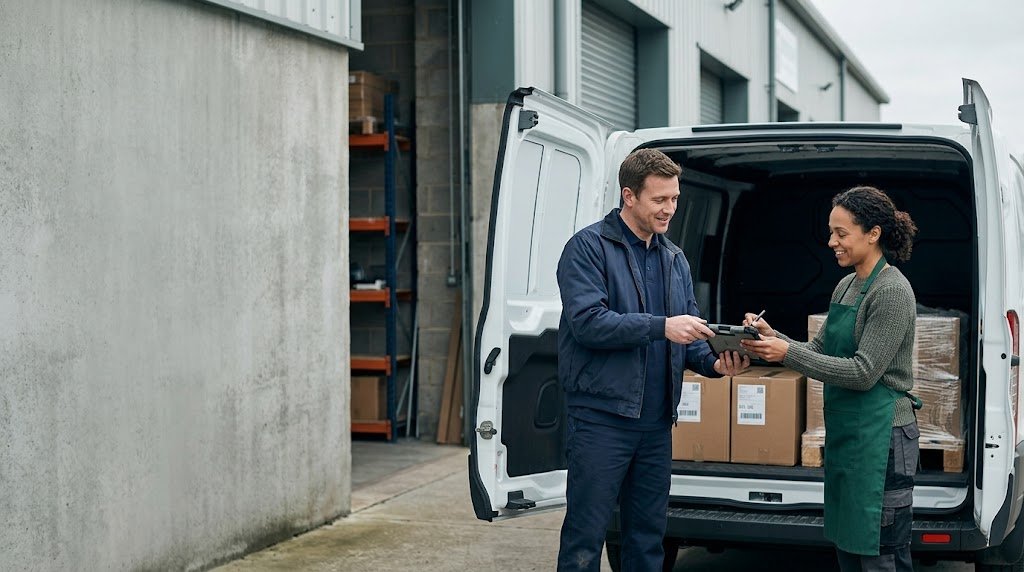
- Request proof of delivery. Ask for a signature, a timestamp, and, where possible, photographic confirmation on arrival.
- Keep your own record. Save the tracking reference, the recipient's name, and the delivery confirmation alongside your case file. If the delivery is ever questioned, you'll want this on hand.
Following these steps takes a few extra minutes at the point of booking. Weighed against the risk of a rejected filing or a leaked document, that's time well spent.
Court document courier: rules to know
Filing deadlines and court acceptance
Courts work to strict cut-off times, and most won't accept a filing that arrives even a few minutes late. Build in a buffer. Booking a courier for the exact deadline leaves no room for traffic, a locked door, or a queue at the counter.
Our post on how fast a same day courier really is breaks down realistic collection and delivery windows across the UK, which is worth checking before you commit to a same-day filing.
Serving documents on the other party
Serving legal papers on an opposing party or their solicitor usually needs proof that the document reached the right person. A courier that provides a named signature and a delivery timestamp gives you exactly that, and it holds up far better than a certificate of posting.
Confidential document delivery: keeping information safe
Sealed packaging and tamper evidence
Tamper-evident seals show immediately if a package has been opened in transit. Combine that with a sealed envelope and you've closed off the most common point of failure: someone accessing the contents along the way.
Restricted access and named recipients
Whenever possible, specify that a document can only be handed to a named individual, not left with reception or a neighbor. For anything containing personal data, a dedicated van courier keeps your documents in a single vehicle, with a single driver, from collection to final handover.
Sending legal documents across borders
Not every legal delivery stays within the UK. Cross-border deals, international litigation, and overseas property transactions all come with an extra layer to plan for.
Customs paperwork, longer transit times and different court rules on service all need factoring in. If a document needs to reach a solicitor in Dublin or a client in Paris by a set date, build in extra time for clearance, and confirm in advance that the receiving party can accept a courier delivery rather than requiring registered post. A quick call to your courier before booking saves a document sitting at a border checkpoint on the day it was due to arrive.
Domestic deliveries within the UK don't carry these complications, which is one reason many firms prefer to keep cross-border legal work to a minimum where a domestic alternative exists, such as instructing local counsel to handle service in person.
Costs of legal document courier services
Pricing depends on distance, urgency, and how the document needs to be handled. As a rough guide:
- Distance between collection and delivery. Higher mileage means a higher base rate.
- Urgency (same day vs. standard). Same-day and 60-minute collection cost more than next-day.
- Vehicle type. A dedicated van costs more than a shared multi-drop slot.
- Out-of-hours collection. Evenings and weekends often carry a small premium.
- Additional proof requirements. Photographic proof or signed chain-of-custody paperwork may add a small fee.
For firms sending legal documents regularly, a business courier account usually works out cheaper than booking each delivery individually. You get preferential rates, monthly invoicing, and priority booking, which matters when a court deadline lands with only an hour's notice.
It's worth weighing cost against consequence here. A same-day dedicated courier might cost more than a standard next-day service, but compare that against the cost of a missed filing, a failed completion, or a breach notification to a regulator. For most firms, the extra spend on security and speed is small next to what's at stake.
Common mistakes when sending legal documents by courier
- Choosing price over security. The cheapest option is often a shared, multi-stop service, which is the last thing you want for a confidential document.
- Leaving the booking too late. A 4pm court deadline needs a courier booked well before lunch, not at 3:30.
- Not confirming the recipient. A document served on the wrong person or department can invalidate the service entirely.
- Skipping proof of delivery. Without a signature and timestamp, you've got no evidence the document arrived when you say it did.
- Using standard packaging for sensitive material. A plain envelope offers no protection against tampering or an accidental opening at the wrong address.
- Assuming email is a safe backup. Scanning a document and emailing it as a fallback can create a second, unsecured copy of something that was meant to stay confidential. If you need a backup plan, agree on it with the recipient in advance rather than defaulting to it under pressure.
- Forgetting to brief the courier on special instructions. If a document must go to a named person only or needs a specific reference number on arrival, say so at the point of booking. Don't assume it'll be worked out on the day.
Choosing a courier company you can trust
Look for a provider with real experience in legal deliveries, not one that treats a court bundle the same as a parcel of samples. Ask how many legal or confidential deliveries they handle in a typical week, and whether they can point to a client in the legal sector who'd vouch for them.
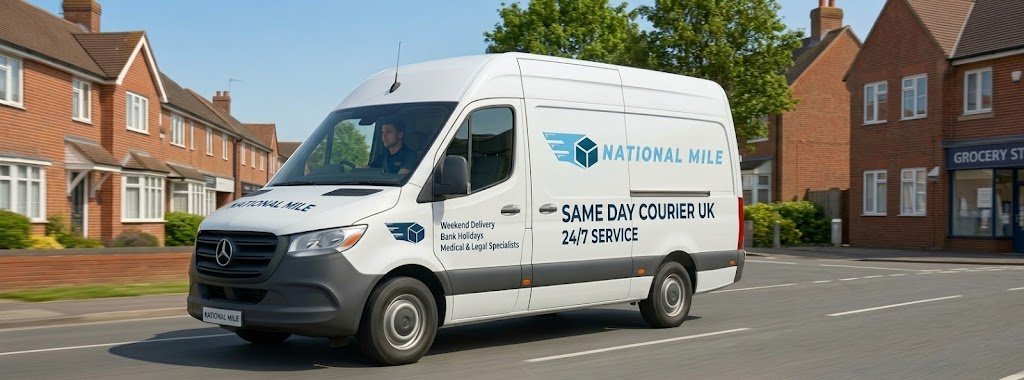
National Mile is a nationwide courier company built around exactly this kind of work. Our legal document courier service covers contracts, court papers, and confidential files across the UK, with dedicated vehicles, signed proof of delivery, and same-day collection built in as standard. Bookings can be arranged with as little as an hour's notice, which matters when a deadline lands without warning.
The Information Commissioner's Office also sets out clear expectations for handling personal data in transit, which is worth a read if your documents contain client information alongside the legal content.
Frequently asked questions
How quickly can a legal document courier collect my paperwork?
Most same-day services can arrange collection within 60 minutes, depending on your location and the time of day. For court deadlines, book as early as you can to build in a safety margin.
Is a legal document courier different from a standard courier?
Yes. A legal document courier uses dedicated vehicles, sealed packaging, and named-recipient delivery with a full chain of custody. A standard multi-drop courier isn't built for that level of security or urgency.
Can a courier serve legal documents on my behalf?
A courier can deliver documents to a named recipient with signed proof of delivery, which supports service of process. Always check the specific legal requirements for your case, since some jurisdictions have particular rules on who can serve documents.
What happens if a legal document is lost in transit?
A reputable courier carries insurance covering the value and sensitivity of legal paperwork. Ask about this before booking, since standard parcel insurance often won't cover it properly.
Do I need a business account to book legal courier services regularly?
Not to book a single delivery, but a business account brings preferential rates, monthly invoicing, and priority booking, which helps when deadlines are tight and frequent.
What's the difference between a legal document courier and a same-day courier? A same-day courier focuses on speed: fast collection and same-day drop-off, available around the clock for urgent filings and weekend deadlines. A legal document courier adds the extras that legal work needs on top of that speed, including sealed packaging, named-recipient delivery, and a full chain of custody. National Mile offers both under one service.
Final thoughts
Getting a legal document from one desk to another sounds simple until a deadline or a confidentiality clause is attached to it. Sealed packaging, a dedicated vehicle, signed proof of delivery, and a courier who understands legal deadlines turn that simple task into a secure one.
If you've got contracts, court papers, or confidential files that need to move today, book a legal courier with National Mile and get it there on time, with the proof to back it up.